Transfăgărășan Highway (DN7C)
Romania's engineering marvel slicing through the Carpathian Mountains, offering a dizzying mix of sweeping curves, dark tunnels, and raw elevation.
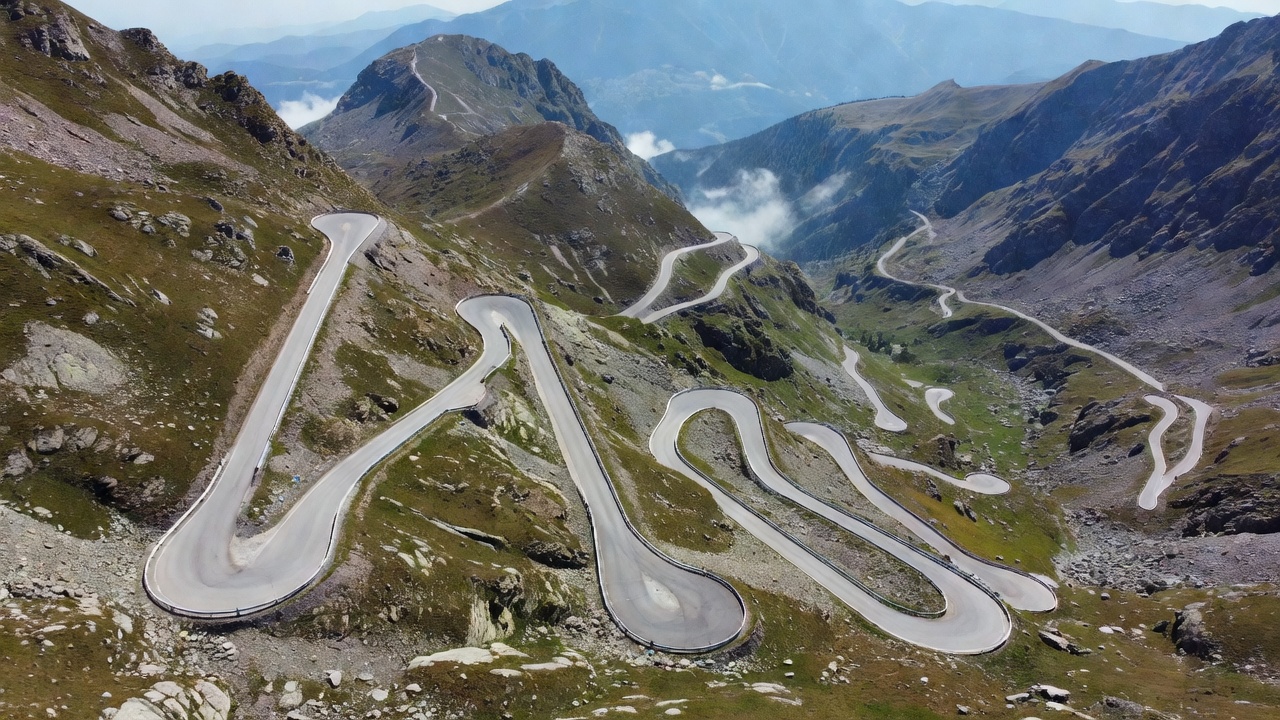
The Route Profile
Built as a strategic military route in the 1970s, the Transfăgărășan (DN7C) connects the historic regions of Transylvania and Wallachia. For motorcyclists, it represents a rite of passage. The Northern approach is heavily forested before giving way to the iconic, treeless alpine section, revealing an asphalt ribbon draped across glacial valleys.
Riders can expect extreme elevation changes. As you approach Balea Lake at the summit, the gradient tightens, demanding sharp braking and precise gear selection. The corners range from fast, open sweepers in the lower valleys to first-gear, steeply banked hairpins near the peak.
Surface & Conditions
Unlike some of the pristine Alpine passes in Western Europe, the Transfăgărășan is rugged. The tarmac is a patchwork in places. You will encounter mid-corner ripples, frost heaves, and occasional gravel washouts from recent rains. Adventure bikes with long-travel suspension (like the BMW GS series or Africa Twin) absorb these imperfections effortlessly, but sports bike riders must maintain laser focus to avoid jarring hits on the front forks.
Weather is another critical factor. At over 2,000 meters, conditions change rapidly. You might depart the valley floor in 25°C heat and arrive at the summit tunnel in heavy fog and single-digit temperatures. The Balea Tunnel, which connects the north and south faces, is dark, unlit, and often slick with dripping water. A clear visor and functional auxiliary lights are highly recommended.
Scenery & Stops
The visual reward is staggering. The Vidraru Dam on the southern approach offers stunning views over an immense artificial lake. Further up, Balea Lake sits in a glacial cirque surrounded by jagged peaks. It’s a popular tourist trap, so finding a parking spot for the bike can be a skirmish on weekends, but the local food stalls selling cured meats and chimney cake are worth a brief stop.
The Good
- Iconic, visually spectacular layout.
- Incredible variety of corner types.
- Affordable local accommodation and food.
- Minimal police presence outside of the villages.
The Bad
- Inconsistent tarmac quality.
- Heavy summer tourist traffic on weekends.
- Very short riding season (often closed until July).
- Stray dogs and wildlife hazards.
Final Verdict
The Transfăgărășan isn't about setting lap times; it’s an adventure. The imperfect surface forces a rhythmic, flowing riding style rather than aggressive apex-hunting. Plan to tackle it early on a weekday morning to beat the caravans and tourists. When the road is clear and the mist lifts off the valley, there are few places on earth that make you feel more alive on two wheels.