Stelvio Pass (SS38)
The undisputed heavyweight champion of European mountain passes. A brutal, breathless, and iconic climb that demands respect and absolute machine control.
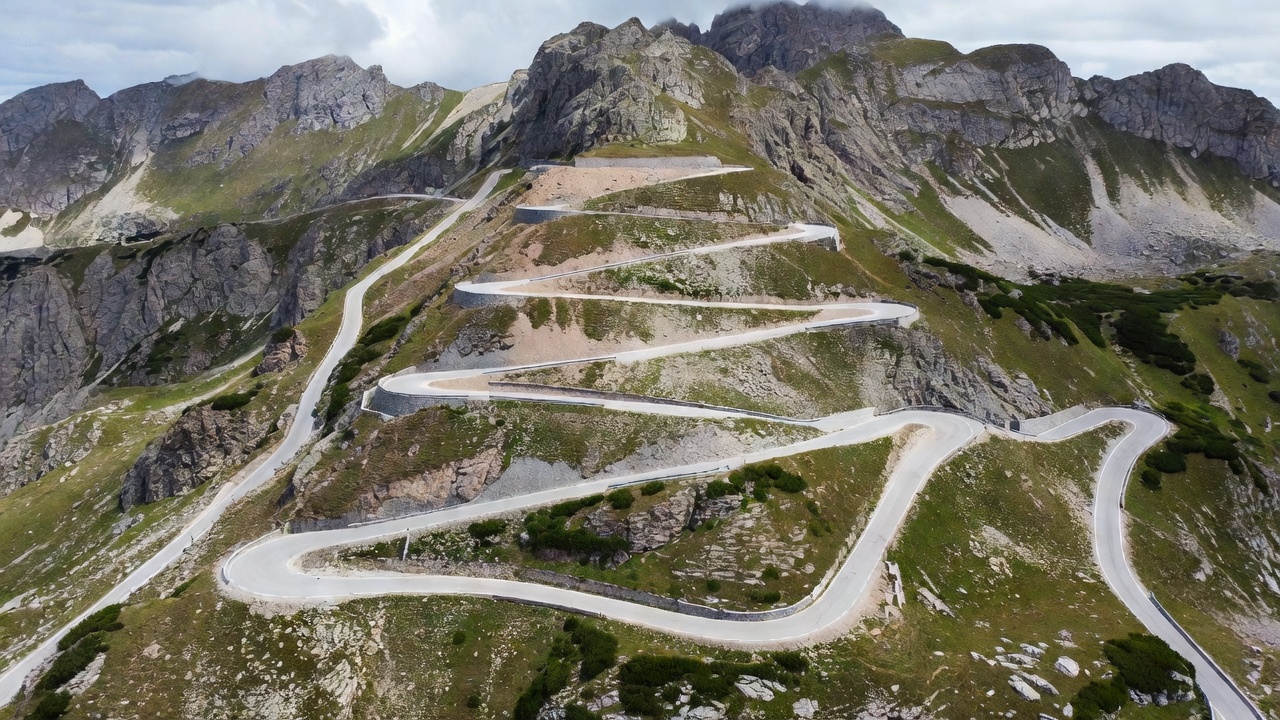
The Route Profile
The Stelvio Pass is not famous for its flowing rhythm. It is famous for its sheer verticality and the relentless repetition of its switchbacks. Approaching from Prato allo Stelvio (the classic North face), riders are faced with a towering wall of rock laced with 48 numbered tornanti (hairpins). The road is narrow, bordered by low stone walls that offer zero margin for error.
Riding the Stelvio requires advanced clutch and throttle control. The hairpins are incredibly tight and heavily banked on the inside. If you meet a descending bus or campervan mid-corner, you will likely have to stop, balance the bike on a steep off-camber incline, and maneuver around them. Target fixation here is your worst enemy; you must turn your head completely to look up the hill through the exit of the corner.
Surface & Conditions
The tarmac is generally well-kept but suffers under the extreme winter conditions. Expect uneven patches, longitudinal cracks, and occasionally some loose gravel kicked out by cars clipping the apexes. The altitude is high enough that carburetor-fed bikes will noticeably lose power near the summit, and even modern fuel-injected engines will feel slightly breathless.
Weather is notoriously unpredictable. It is not uncommon to experience rain in the valley, brilliant sunshine halfway up, and a sudden snow squall at the 2,757-meter summit, even in mid-August. Thermal layers and waterproof gear are non-negotiable.
The Reward
Reaching the summit is chaotic but exhilarating. It resembles a high-altitude carnival, packed with bratwurst stands, souvenir shops, cyclists catching their breath, and hundreds of other motorcyclists. From the viewing terraces, you can look back down the valley at the ribbons of asphalt you just conquered—an essential photo opportunity.
The descent down the South-West face toward Bormio is entirely different. It offers 39 more hairpins, but they are generally faster, wider, and interspersed with longer straights, allowing for a much more relaxed and flowing ride compared to the grueling northern climb.
The Good
- Bragging rights—it’s the highest paved mountain pass in the Eastern Alps.
- Incredible structural engineering visually.
- Vibrant, celebratory atmosphere at the summit.
- The descent to Bormio is fantastic.
The Bad
- Intense traffic, especially motorhomes and cyclists.
- Hairpins can be physically exhausting.
- Highly technical; not recommended for beginners or massive touring rigs.
Final Verdict
The Stelvio Pass is a challenge of technical ability rather than high-speed thrills. It will test your low-speed balance, your clutch hand, and your patience with other road users. Tackle it at 6:00 AM before the caravans wake up, and you’ll experience one of the most mechanically demanding and visually spectacular climbs in the world.